Fanal's old til trees need us to tread lighter: how to visit without harm
Climbed trees, bare soil and litter: what crowds are doing to Fanal's centuries-old til trees, what's being done, and how to visit without harm.
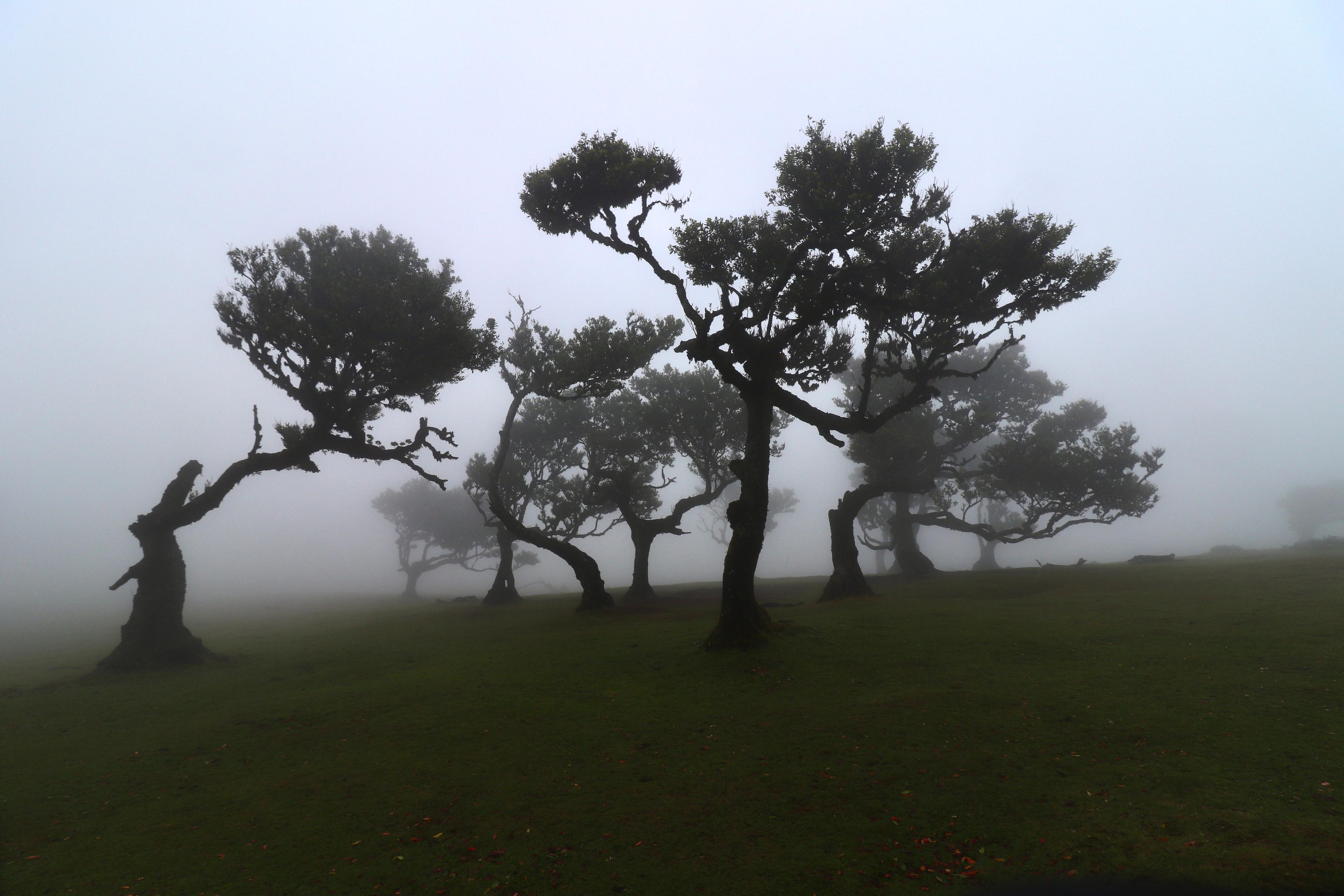
There's a moment in Fanal, when the fog rolls in between the old til trees, that makes you go quiet without being told. Those twisted trunks, green with moss, were standing here long before any of us. They're the reason so many of us locals love this plateau. They're also why it hurts to see what's happening to it.
The short answer: Fanal's centuries-old til trees are being damaged by trampling, climbing, litter and grazing cattle. The regional government is fencing the trees, has announced a cap of about 3,000 visitors a day with one official circuit, and plans to move parking away. You can help by staying on the circuit, never climbing the trees, and walking in.
Key facts
- Where: Fanal, a plateau in the north-west of Madeira, between Ribeira da Janela and Paul da Serra (Visit Madeira).
- Trail: PR 13 Vereda do Fanal, 10.8 km from Paul da Serra to Fanal. Status: ABERTO (open) on IFCN's list updated 2 October 2026.
- Booking and fee: like other classified trails, PR 13 needs a slot booked on SIMplifica; non-residents pay €4.50 (IFCN FAQ).
- Visitor cap: about 3,000 a day on the Fanal circuit, announced in November 2025.
Why these trees matter
Fanal is part of Madeira's Laurisilva, the laurel forest that UNESCO made a World Heritage Site in 1999 as the largest surviving area of a forest type that once covered much of southern Europe. It is also a Natura 2000 site, part of the EU's network of protected areas. Locally, according to a former director of the Madeira Natural Park writing in Madeira Island News in 2025, Fanal was classified in 1982 as a "Rest and Silence Area" (Zona de Repouso e Silêncio), for quiet, walking-only enjoyment.
The til (Ocotea foetens) is a remarkable tree. It can regrow from shoots at the base of its trunk, which is why old tis often have several trunks. Visit Madeira says some of Fanal's tis date back to before the Portuguese discovered the island. Lose one and you don't get it back in our lifetime.
What we're seeing on the ground
I'll be honest about what I've seen myself walking here over the years. People climb the trees for photos and snap branches. Around the most photographed tis the ground is bare and hard, and the roots are exposed. There's litter behind the trunks and, sadly, toilet paper. On busy days you get crowds, photoshoots with props, and the odd drone buzzing over the cows.
It's not just me:
- Climbing and broken branches: the party PAN Madeira has described, in JM Madeira, frequent cases of tourists climbing centuries-old tis and laurels "for the perfect photo", and fallen branches becoming more visible every year.
- Trampled soil: the environmental group Quercus Madeira warned, as Times of Madeira reported, that visitors walking off the paths trample the soil and disturb the roots of the old trees. They also mention overflowing car parks.
- Cattle: another pressure has nothing to do with tourists. Quercus says free-roaming cows eat the young til shoots, which stops the forest from regenerating.
To be fair, the Regional Secretary Eduardo Jesus pushed back on alarmist claims in May 2026, quoted by DN Madeira, saying "Fanal is not in disaster, nor has it ever been." My own view is that the truth lies somewhere in between: serious damage in places, but not too late.
What's being done
This is the encouraging part:
- Fencing the trees. In November 2025 IFCN (the regional forest and nature agency) began fencing off groups of tis, RTP Madeira reported, to protect them and take pressure off the soil. In May 2026, according to JM Madeira, a 1.3 km barrier went up along the road, with three access gates.
- A visitor cap and a single route. A University of Madeira study set a maximum of about 3,000 visitors a day (reported by Times of Madeira), with one official circuit and fixed "photo stops". The plan also adds an interpretation centre, new leisure areas and toilets.
- Rest for damaged areas. The government told DN Madeira it is regenerating sensitive zones and adjusting protection areas over time, with teams permanently on the ground in natural areas.
- Moving parking away. Fanal is on the list of priority sites where access will be reorganised, with new car parks and entry control (same source). In the Secretary's words, the habit of "taking the car to the start of the trail has to be countered."
The toilets matter more than they sound: no facilities means toilet paper behind the trees. Fencing, a fixed route and proper toilets go straight at the problems we see on the ground. What's still missing, in my view, is livestock control, which both groups keep asking for.
How to visit Fanal without harming it
- Stay on the marked circuit and outside the fences. The roots are just under your feet.
- Admire the trees, don't climb them. A photo from the ground, framed by the fog, is the better shot anyway.
- Go early, late, or mid-week. In my experience Fanal is magical at 8 a.m. and nearly empty in the rain. Fog is the whole point.
- Plan a toilet stop before you drive up, and carry out everything you bring, tissues included.
- Leave the drone in the bag. It bothers the animals and everyone else looking for a bit of silence.
- Park only in proper spaces, never on verges, or share a car or come with a small local guide.
- Walk in. The classified PR 13 Vereda do Fanal comes up from Paul da Serra, and arriving on foot is the most beautiful way to meet these trees.
- Keep your voice down. It's still meant to be a place of rest and silence.
FAQ
Is Fanal open? PR 13 Vereda do Fanal was ABERTO (open) on IFCN's list updated 2 October 2026. Check the list on the day.
Is there a visitor limit in Fanal? A cap of about 3,000 visitors a day on the Fanal circuit was announced in November 2025.
Can I climb the til trees? Please don't. Climbing breaks branches, and parts of the forest are now fenced to protect the trees.
Fanal has survived a very long time. With a bit of care from all of us, the tis will still be standing in the fog for our grandchildren.