
The pretty levada flowers Madeira's laurel forest could do without
Agapanthus, hydrangea and wild ginger line Madeira's levadas, but they're invaders. Why they threaten the laurel forest, and how hikers can help keep it native.
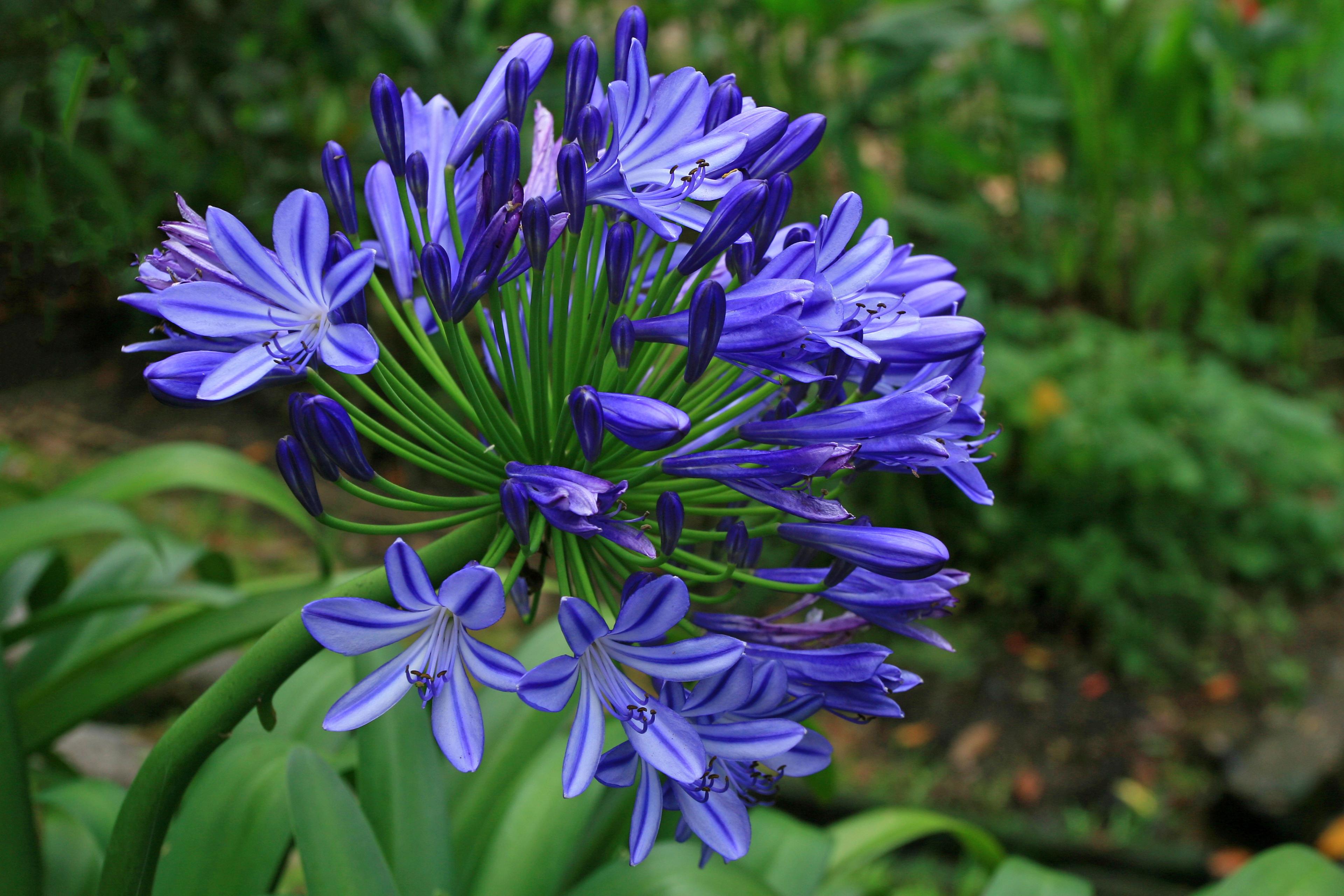
Most people who walk a levada (one of Madeira's old irrigation channels with a path alongside) come home with the same photos: blue and white agapanthus, big pom-poms of hydrangea, maybe a tall spike of yellow ginger flowers by the water. They look like Madeira. For years many of us thought they were Madeira. They aren't, and some of them are slowly pushing the real forest out.
This week gave the subject a sharp new hook. DN Madeira's front page on 23 October 2026 carries the headline "Planta carnívora no Fanal": a researcher, it says, points to the "deliberate" placing of an exotic species right inside the Laurissilva and warns of environmental risks. Fanal is the misty pasture of ancient til trees (Ocotea foetens, a laurel-family tree) on the north-west edge of the Paul da Serra plateau. Whatever the details turn out to be, it's a good moment to explain why a single "harmless" plant in the wrong place is a big deal here.
What the Laurissilva is, in one minute
These facts come from the official sources listed below.
- The Laurissilva (laurel forest) is Madeira's native forest of evergreen trees and shrubs with dark, flat leaves. IFCN, the regional forest and nature agency, calls it a relic of the Tertiary period, about 20 million years old, and says it was already here when Portuguese navigators arrived.
- It covers 16,440 hectares according to the region's third forest inventory, presented in January 2026, and that's 98% of the natural forest in the region (DN Madeira).
- It's mostly on the north coast, from about 300 to 1,300 metres up (IFCN).
- It has been a UNESCO World Heritage Site since December 1999.
- It has its own birds, such as the pombo-trocaz (the Madeiran laurel pigeon), which IFCN calls the "sower" of the forest because it eats the fruit of trees like the til and spreads their seeds.
The problem: plants that don't belong
In its 2025 World Heritage Outlook, IUCN (the International Union for Conservation of Nature) rates the Laurissilva "good with some concerns". It names two threats as the most serious: forest fires and the spread of invasive species, and it says climate change makes both worse.
IFCN goes further. On its invasive plant control page it says these plants were brought to Madeira "consciously or unconsciously", spread on their own, and have become "the biggest threat to the balance and future of the island ecosystems".
Here are a few of the ones you will actually meet on a walk:
- Bananilha, Kahili ginger (Hedychium gardnerianum): the tall plant with yellow flower spikes along wet levadas. IFCN has been trying to eradicate it in and around the laurel forest since 1998.
- Novelos, hydrangea (Hydrangea macrophylla): the classic blue pom-poms. IFCN has been removing small patches of it inside the Laurissilva since 2006, starting around Fajã da Nogueira and Ribeira Funda de São Jorge.
- Agapanthus (Agapanthus praecox): listed by IUCN among the invasive plants threatening the site.
- Maracujá-banana, banana passionfruit (Passiflora mollissima): a climbing vine IFCN has also been clearing from the laurel forest.
IUCN explains how they get in. The edges of the forest are under the most pressure from invasive plants: old farmland lower down and burnt or grazed heath higher up. Several of these invaders are also fire-prone and spread quickly after a fire, which makes it harder for the native forest to recover. In other words, fire and invasive plants feed each other.
Why the levadas matter here
This was the part that surprised me. IUCN says the levadas themselves can spread non-native species, partly because alien plants are "commonly found as ornamental plants along the channels". It notes that planting non-native ornamentals in natural habitats has been forbidden since 2023 under Regional Legislative Decree 17/2023/M, Madeira's law on exotic species. The same report mentions a project that replaced invasive plants with native ornamental ones along the Levada do Norte.
So some of those postcard flowers are left over from a time when people planted whatever looked nice by the water, and now they're seeding themselves into the forest.
How I see it as a local
I'm not going to pretend hydrangeas aren't pretty. But I've learned to see a levada differently: the flowers that look "Madeiran" are often the newcomers, and the real stars are greener and quieter. They're the ferns, the mosses, the old til trees and the little native plants you have to bend down to notice.
That's why a story like this week's, about someone deliberately placing an exotic plant in the forest, hits hard. Every plant that turns up where it shouldn't is one more job for the people whose work is finding and removing invaders. IUCN mentions a current project to set up a specialised team for exactly that: early detection and rapid removal of invasive plants in Madeira's natural areas.
Good-guest tips: how not to bring a stowaway
These are mostly IFCN's own suggestions, plus a few common-sense ones.
- Don't bring plants or seeds to Madeira, and don't plant anything in nature, however pretty or harmless it seems. IFCN asks travellers directly not to give in to the temptation of bringing exotic plants with them.
- Clean your boots before you come. Mud and seeds from hikes back home are an easy way for a new plant to arrive. That's a tip from me, not an official rule, but it costs nothing.
- Don't pick flowers, and don't carry cuttings from one valley to another. Even "just a sprig" can root by a wet levada.
- If you live here, choose native plants for your garden and compost your garden waste rather than dumping it, especially never in natural areas (IFCN).
- Stay on the path. Trampled edges are where invaders get their foothold.
- Don't release pets or aquarium animals. IUCN singles out feral cats as particularly hard to deal with, and names the New Zealand mud snail as a newly detected risk to freshwater habitats.
- Take your rubbish home. IUCN notes that some visitors leave waste inside the protected forest.
FAQ
Are hydrangeas native to Madeira? No. IFCN lists Hydrangea macrophylla among the main invasive plants in the region.
Is it illegal to plant non-native plants in Madeira's nature? According to IUCN's 2025 assessment, Decree 17/2023/M has forbidden using non-native species as ornamentals in natural habitats since 2023.
What's the biggest threat to the laurel forest? IUCN names forest fires and invasive species as the most serious threats, both made worse by climate change.
Next time you're on a levada, try spotting one invader and one true native. It's a nice game, and it changes how you see the place.